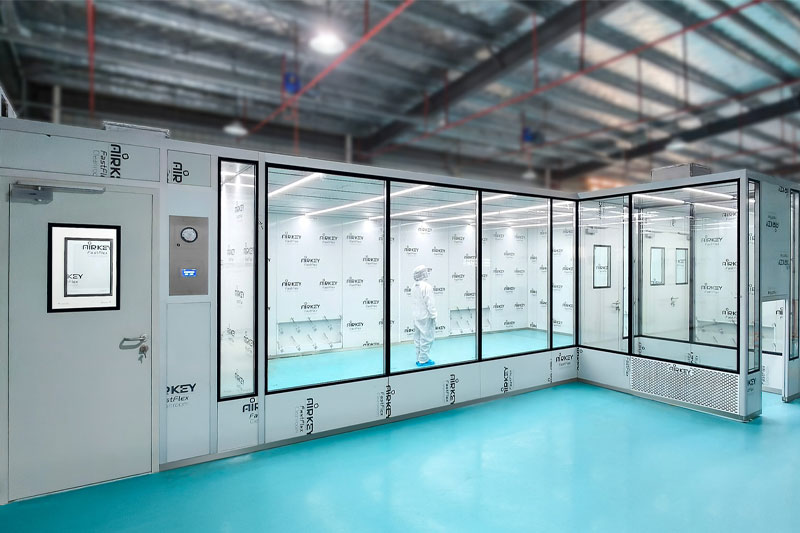
Case Study: Airkey's Space-Optimised ISO 7 Cleanroom for Medical Equipment Facility. Precision-Engineered in China, Deployed in Australia
- Project Specifications: Tailored for Medical Device Processing
- Application: Medical Equipment Cleaning & Packing
- Cleanroom Class: ISO 7 (Class 10,000)
- Dimensions: 9.2m (L) x 4m (W) x 2.7m (H)
- Key Features: Integrated HVAC system, flush-mounted air return walls, EC motor FFUs, intelligent control system
- Compliance: Fully engineered to meet ISO 14644-1 cleanroom standards
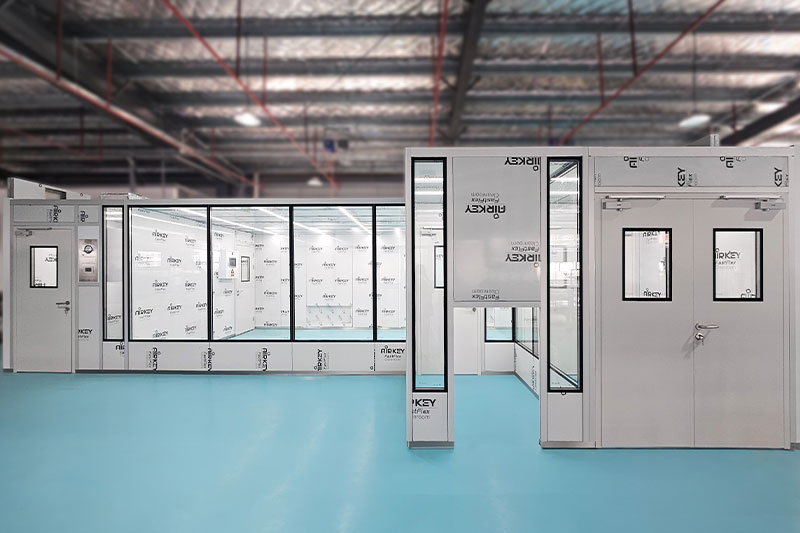
Smart Layout Design for Contamination Control
The cleanroom layout was strategically designed to ensure strict separation of personnel flow and material flow, a fundamental requirement for cross-contamination prevention in medical applications:
- Change Room & Washing Room: Personnel must pass through these controlled zones before entering the main cleanroom, ensuring proper gowning and hygiene protocols.
- Material Transfer Room: Dedicated space for receiving materials with controlled access.
- Storage Room: Separate storage area to maintain organized material flow.
- Main Cleanroom: ISO 7 environment for medical equipment cleaning and packing operations.
This logical separation ensures that personnel and materials follow distinct, non-intersecting paths, significantly reducing contamination risks.
Engineering Excellence: Overcoming Complex Installation Challenges
The project presented significant spatial constraints that required innovative engineering solutions:
Challenge 1: Limited Mezzanine Height with Air Duct Requirements
Problem: The cleanroom was destined for a mezzanine area with only 3.1m floor height, yet the customer required a 2.9m total height including the air duct system. Additionally, no ceiling penetrations were permitted in the wooden structure above.
Solution: Engineers conducted precise site coordination, mapping the exact distance between wooden beams to strategically layout the air ducting system and determine the optimal AHU placement. This meticulous planning maximised every centimeter of available space.
Challenge 2: Maintenance Accessibility
Problem: With restricted overhead access, future HEPA filter replacement could become problematic.
Solution: Implementation of Blower Filter Units (BFUs) designed for internal filter replacement. This allows maintenance personnel to change HEPA filters from inside the cleanroom without requiring overhead access.
Challenge 3: Space Optimisation
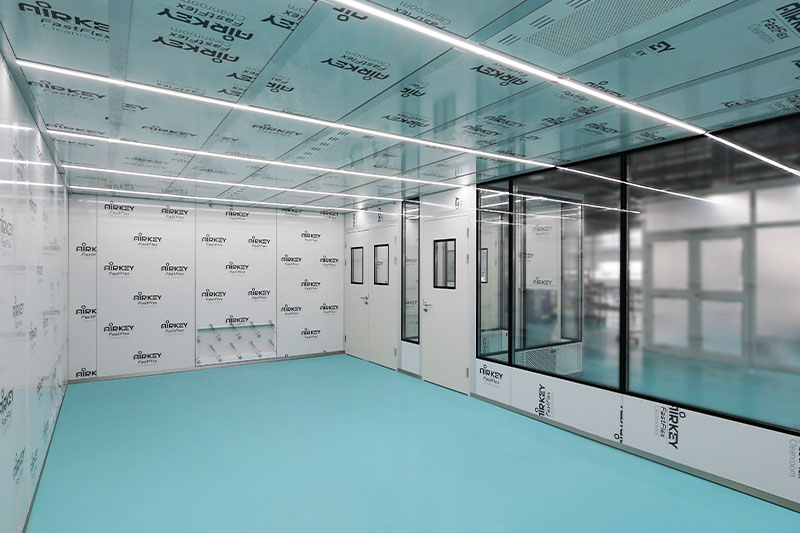
Problem: Traditional protruding return air columns would waste usable space.
Solution: Custom-designed flush-mounted air return wall panels integrate seamlessly into the walls, delivering return air back to the HVAC system without occupying valuable floor space. This creates a smooth, cleanable surface while maximizing operational area.
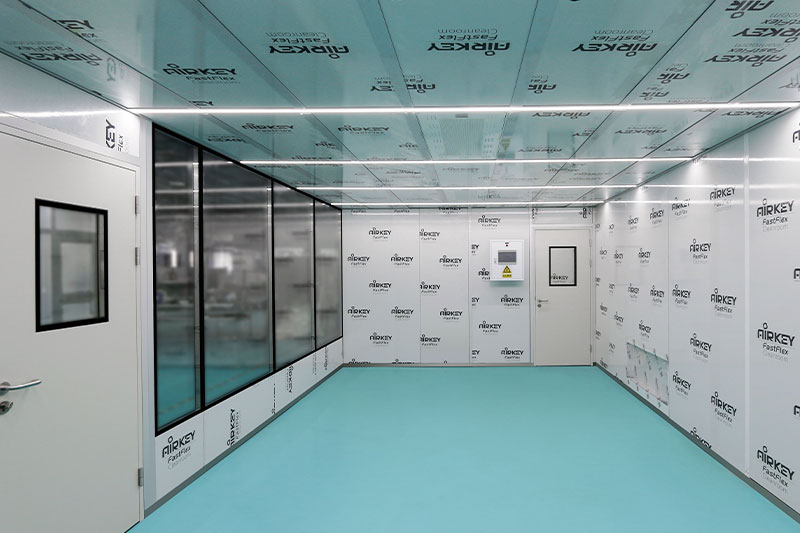
Factory Pre-Assembly & Testing: Guaranteed Performance
Before shipment to Australia, the complete modular cleanroom was assembled in Airkey’s facility and subjected to rigorous Factory Acceptance Testing (FAT):
- Airflow velocity tests
- HEPA filter integrity testing
- Room pressure differential verification
- Particle count testing to confirm ISO 7 classification
This proactive testing approach eliminates on-site performance issues and accelerates commissioning and validation upon delivery.
Company Capability Statement
Airkey offers comprehensive EPC/M capabilities, including:
- Engineering
- Procurement
- Construction
- Maintenance
These capabilities enable delivery of fully integrated turnkey cleanroom solutions from concept through long-term operation.