
Annex 1 emphasises the preferred use of barrier systems to minimise direct operator influence on the product within sterile manufacturing environments. When a barrier system is not employed, its absence must be scientifically justified through a comprehensive risk assessment supported by reliable data.
Additionally, Annex 1 requires that airflow visualisation studies such as smoke tests be performed during the initial qualification of cleanrooms and filling lines. These studies must also be repeated following any modifications that could affect airflow dynamics, including changes to equipment layout or operational procedures.
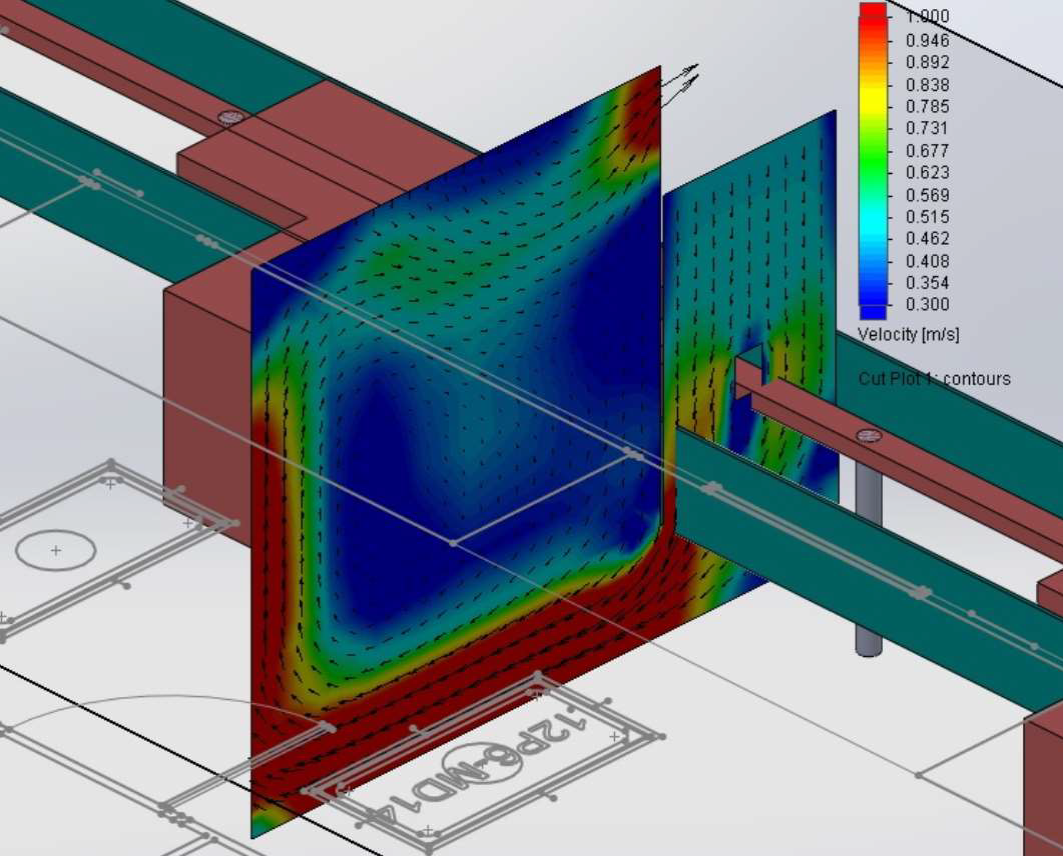
This article examines the influence of Open Restricted Access Barrier Systems (O-RABS) on cleanroom airflow patterns, highlights the importance of robust design strategies based on Computational Fluid Dynamics (CFD) simulations and emphasises the role of smoke testing not only as a qualification tool but also as a critical element during the startup phase to ensure optimal system performance.
Cleanroom requirements and conventional pattern
While unidirectional airflow units (UDAFs) provide non-turbulent unidirectional flows which flush particles away from critical areas (displacement effect), HEPA-filtered supplies together with air returns position and size create the flow patterns of the surrounding space ensuring that there are no stagnant areas where air is not circulating effectively (dilution effect).
Airflow visualisation studies provide visual evidence not only of this unidirectionality but also of the entire cleanroom (including UDAFs and HVAC system) to protect product from contamination. According to European Good Manufacturing Practices (EU GMP) Annex 1, clause 4.15, they should prove no entry of air from lower grade to higher grade, nor from less clean areas, such as the floor, to critical areas.
These visualisation studies by means of smoke generators, outlined in ISO 14644- 3, should be considered in both risk assessment and training programs, and should be performed during Qualification at rest and in operation conditions. In case of non-compliance, design improvement might be needed when it is too late and consequences in project execution are noticeable. CFD simulations at detailed engineering stage can reveal future problems when corrective measures are easier to implement.
The open RABS concept
An open RABS is a physical barrier system used in


