

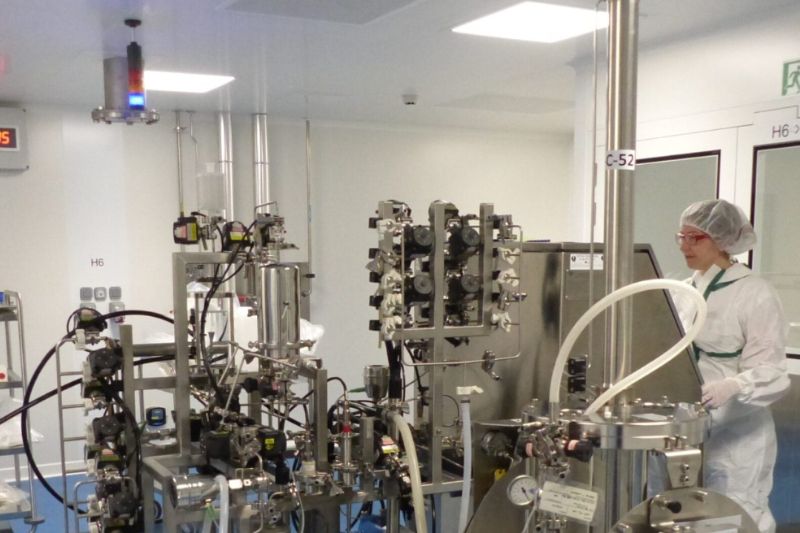
Axplora is assessing ways to improve the energy efficiency of cleanrooms and controlled manufacturing environments as part of its emissions reduction targets validated by the Science Based Targets initiative (SBTi).
The pharmaceutical manufacturing partner’s Scope 1 and 2 emissions reduction target of 42% and Scope 3 target of 25%, both against a 2023 baseline, form part of its ActNow 2030 sustainability programme.
“Efficiency has always been fundamental to how we operate at Axplora,” said Anant Barbadikar, President of PharmaZell Operations, told Cleanroom Technology.
“Our sustainability commitments are accelerating that focus, helping us identify new ways to improve cleanrooms and other controlled manufacturing environments while maintaining the same stringent GMP standards,” Barbadikar explained.
Barbadikar said the company’s customers expect high levels of quality, reliability and compliance while also pursuing their own sustainability targets.
This is prompting Axplora to focus on the efficiency of HVAC, air-handling, cooling and ventilation systems, as well as energy monitoring and heat recovery.
Barbadikar said potential changes to cleanroom operations would be subject to engineering assessment, qualification, validation and formal change control.
“In pharmaceutical manufacturing, there can be no trade-off between sustainability and quality,” he said.
“Any changes to cleanroom operations are subject to rigorous engineering assessment, qualification, validation and formal change control, ensuring we continue to meet the highest standards of GMP compliance while delivering more efficient, lower-carbon manufacturing for our customers.”
The SBTi-validated targets cover emissions from Axplora’s operations, purchased energy and value-chain activities.
The company is also assessing technologies including waste-heat recovery, heat pumps and renewable electricity where technically feasible.
Green measures at Axplora’s facility in India
At Axplora’s Visakhapatnam facility in India, a joint assessment with the Confederation of Indian Industry Green Building Council and World Resources Institute India has identified potential opportunities for heat pumps, waste-heat recovery and renewable energy integration.
These measures are currently at the pre-feasibility stage and will undergo detailed engineering and techno-commercial evaluation before any implementation.
The company said the targets will be incorporated into investment decisions, process development, procurement and day-to-day operations across its sites, alongside work with suppliers to address value-chain emissions.
The announcement follows recent sustainability assessments of Axplora’s European CDMO manufacturing sites.
Four facilities were recognised by EcoVadis, with Leverkusen receiving a Platinum rating, Le Mans Gold, and Pompey and Chasse-sur-Rhône Silver.
Axplora said sustainability performance is also becoming a consideration in pharmaceutical manufacturing partnerships, alongside factors such as quality, delivery and innovation.


