
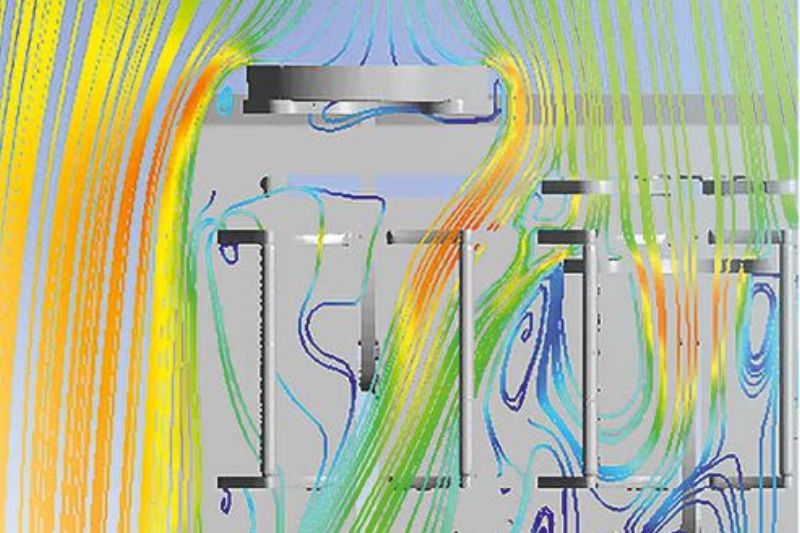
Air monitoring expert MBV has conducted CFD analysis on its MAS-100 Libra automated settle plate changer in aseptic cleanrooms and laminar airflow environments.
The company is a Swiss-based supplier of microbial air monitoring technology for the pharmaceutical and life sciences sectors and launched the innovative system in 2025.
The MAS-100 range is used to sample and measure viable microorganisms, called “microbial air monitoring”, in cleanroom air during production, monitoring and qualification activities.
Microbial air monitoring is used in Grade A and Grade B cleanroom environments to provide a microbiological assessment of air quality during aseptic manufacturing operations.
The range is typically deployed alongside non-viable particle counting systems as part of broader contamination control strategies used in GMP-regulated manufacturing environments.
MAS-100 Libra was highlighted at the Cleanroom Technology Conference in 2024, and since then, MBV has launched the MAS-100 Sirius.
Sirius is an active microbial air sampler that was launched directly in response “to increasing regulatory and technological demands within the pharmaceutical sector.
The Cleanroom Technology Conference returns 20–21 May 2026 at the National Conference Centre, Birmingham — a two-day event showcasing innovations, best practice, and future trends in the cleanroom sector. Click here for more info
Computational Fluid Dynamics (CFD) analysis
MBV’s most recent update to the system focuses on the application in laminar airflow-protected zones, where controlled, unidirectional air movement is used to reduce contamination risk.
These zones are most commonly utilised during sterile processing steps such as filling and preparation.
This analysis was essential to ensure that the MAS-100 Libra does not interfere with the passive air sampling process or compromise cleanroom standards.
The open agar plate on the instrument is exposed to “first air”, which should also be representative of the air in the cleanroom.
MBV’s CFD findings demonstrated that the instrument “does not disturb airflows during passive sampling”.
The report stated that the airflow streamlines around the agar plates positioned on the system and closely resembles standard agar plate setup, ensuring that the instrument preserves the laminar flow essential for cleanroom applications.
Backflow was another important concern and results confirmed that there is no backflow from the instrument onto the sampling agar plate.
Furthermore, the study revealed that airflow pathways within the instrument allow vaporized hydrogen peroxide (VHP) to enter during decontamination cycles. This finding was instrumental in identifying critical control points for validating the VHP decontamination process.
Annex 1 implications
The company also referenced the increased emphasis on environmental monitoring under revised EU GMP Annex 1 guidance.
The guidance strengthens requirements around contamination control strategies, risk-based monitoring and data integrity in sterile manufacturing.
Annex 1 has increased expectations around the frequency and robustness of viable monitoring, with environmental monitoring now positioned as part of wider contamination control systems rather than a standalone compliance requirement.
Automated solutions are now being actively encouraged, but it is important to adequately risk assess them for implementation.
CFD is just one type of assessment for the contamination control risk of new equipment and innovations in cleanrooms.
As a result, automated microbial air sampling systems are increasingly integrated into broader cleanroom monitoring frameworks supporting ongoing performance verification of aseptic processing areas.


