

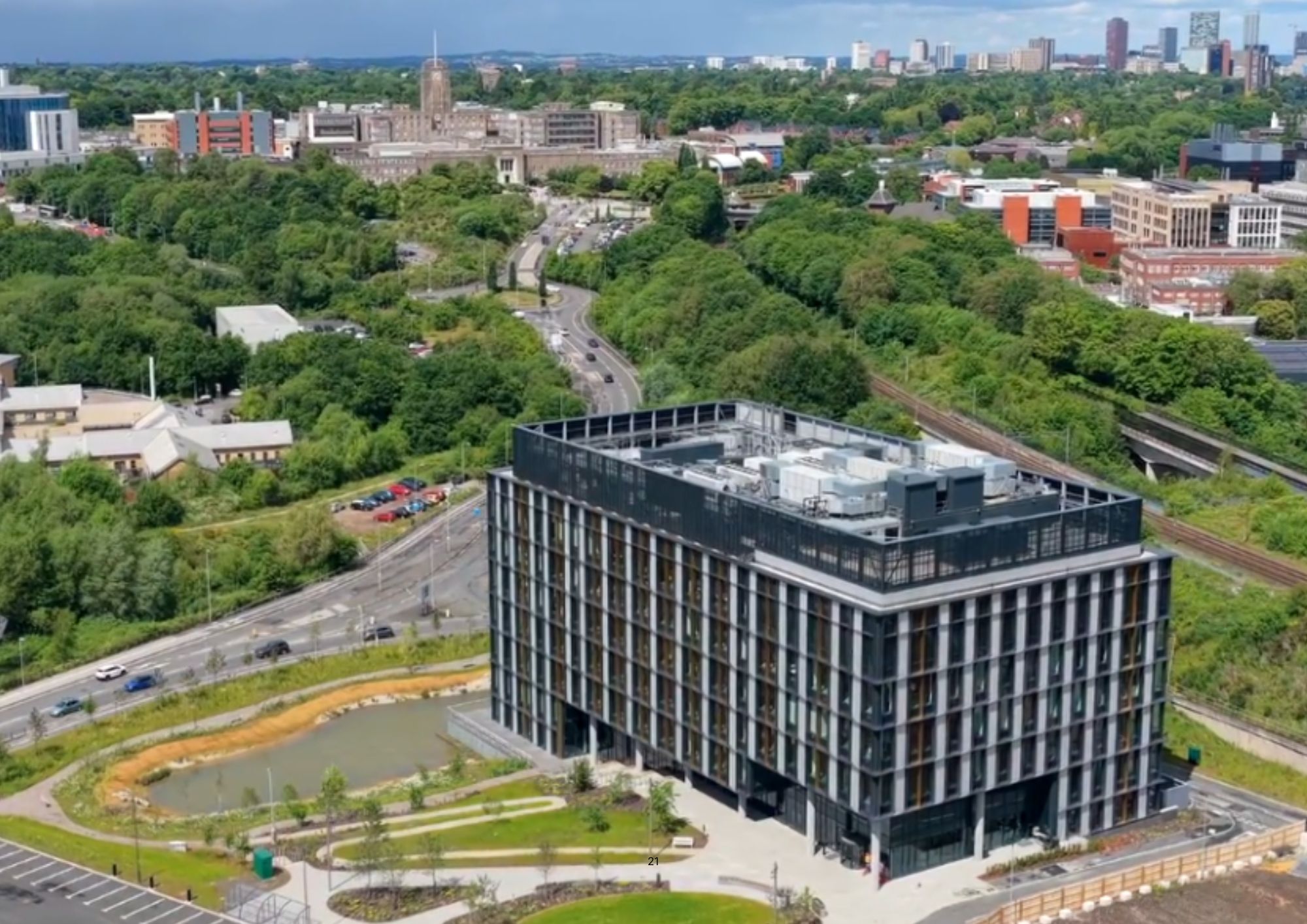
University Hospitals Birmingham (UHB) has secured £1.4m from the National Institute for Health and Care Research (NIHR) to support the development of a new cleanroom manufacturing facility within the Precision Health Technologies Accelerator (PHTA) at Birmingham Health Innovation Campus.
The 440 sqm facility will provide specialist cleanroom capability for the preparation and early-stage manufacture of innovative medicines and advanced therapies for use in NHS clinical trials across the Midlands.
Once operational, the facility will support the development of treatments including chemotherapies, immunotherapies, cell and gene therapies, and other advanced therapy medicinal products (ATMPs), enabling patients to access emerging treatments through clinical research programmes.
A shortage of cleanroom manufacturing capacity across the UK has been identified as a barrier to clinical research, with ageing infrastructure and limited specialist facilities contributing to delays in trials and some studies moving overseas.
In the West Midlands, existing NHS aseptic facilities are already under pressure from routine clinical demand, including cancer treatments, limiting capacity for newer personalised therapies.
The new facility has been developed through a three-year collaboration between UHB, NHS Trusts, PHTA, the University of Birmingham and regional life science companies.
It will provide additional manufacturing capacity for NHS research while also supporting pharmaceutical and biotechnology organisations developing new therapies.
“We are proud to bring this state-of-the-art cleanroom facility to one of the UK’s most diverse and underserved regions. By expanding access to clinical trials, we can ensure new therapies are tested on a wide range of patients,” said Jonathan Brotherton, Chief Executive at UHB.
The facility will be operated by UHB to produce clinical trial supplies for NHS studies, with a dedicated specialist team working to Good Manufacturing Practice (GMP) standards.
This will ensure medicines are produced to pharmaceutical industry quality and safety requirements.
The cleanroom will incorporate specialist engineering systems, including controlled material and personnel entry routes, air pressure cascades, and pharmaceutical-grade heating, ventilation and air conditioning (HVAC) systems.
These measures are designed to maintain controlled environments required for the safe manufacture of investigational medicines.
A significant proportion of the facility will support UHB activity, while other NHS organisations across the West Midlands will be able to access capacity through formal agreements.
The remaining space will be available to pharmaceutical and smaller life science companies, allowing them to manufacture small batches of investigational medicinal products without requiring their own dedicated facilities.
The funding forms part of a £47.8m NIHR investment awarded to NHS Trusts and primary care organisations across England to provide equipment and facilities that support commercial research delivery and accelerate clinical trials.
The cleanroom will be located within PHTA, the University of Birmingham’s flagship health and life sciences research facility, which opened in 2025.
The site provides 70,000 sqft of collaboration and innovation space, including Category 2 wet and dry laboratories for start-ups and scale-ups, a medtech prototype development Makerspace, and commercialisation support.
The co-location of the Queen Elizabeth Hospital Birmingham, the University of Birmingham and PHTA is designed to support collaboration across Birmingham Health Partners and the wider life sciences sector, strengthening the region’s role in advanced therapy research and clinical innovation.


