
Contamination control in a cleanroom is of absolute importance to protect a product or process being conducted. One of the greatest tools for this is controlling air quality, and this is why HVAC (Heating, Ventilation, and Air Conditioning) systems are so strictly controlled in these stringent areas.
An essential component of an HVAC system is the filter, and for cleanrooms, these are commonly HEPA (High Efficiency Particulate Air) or, in certain environments, the more stringent ULPA (Ultra-Low Particulate Air) filters. Although more stringent, ULPA filters often have shorter lifespans, making HEPA filters the optimal balance for most cleanrooms.
In cleanroom applications, these HEPA filters can be used for a multitude of applications, and different users will have different priorities. In many cases, they are installed as terminal filters to help facilities meet ISO 14644 cleanroom classification requirements by maintaining controlled particulate levels in critical zones. Though used in the same way, different users may have different priorities. For example, a pharmaceutical environment might need terminal HEPA for sterile manufacturing, whereas a semiconductor production environment would place greater emphasis on stable airflow. For healthcare teams, initial and running costs are often a priority, whereas for a smaller start-up, a retrofit and customisable dimensions are key.
Addressing application specific challenges, and balancing these needs is what makes a good universal product, and some manufacturers, such as Clean-Link, are addressing these real-world needs.
Clean-Link is a company that has evolved to become a global supplier of industrial HEPA filtration solutions, including high-grade cleanroom HEPA systems. The company has been operating since 2007, and has grown a lot in these 20 years, with manufacturing presences in Guangzhou and Changzhou.
How do you determine product quality from the outside?
The quality of your HEPA filters can have major repercussions throughout the lifespan of your facility, with lower quality products requiring higher airflow and energy requirements, as well as less time between filter replacements.
The generally accepted standards for testing and classifying the efficiency of HEPA filters are the global ISO 29463 standard and the European EN 1822. From a different angle, ISO 9001:2015 certification relates to the manufacturer’s quality management system, ensuring consistent production and process control. From a more general perspective, Finally, CE Marking is another regional mark of conformity that applies in the EU. This marking shows that the product meets essential EU safety, health and environmental protection legislation.
Clean-Link’s compliance with these standards reflects its focus on internationally recognised performance benchmarks.
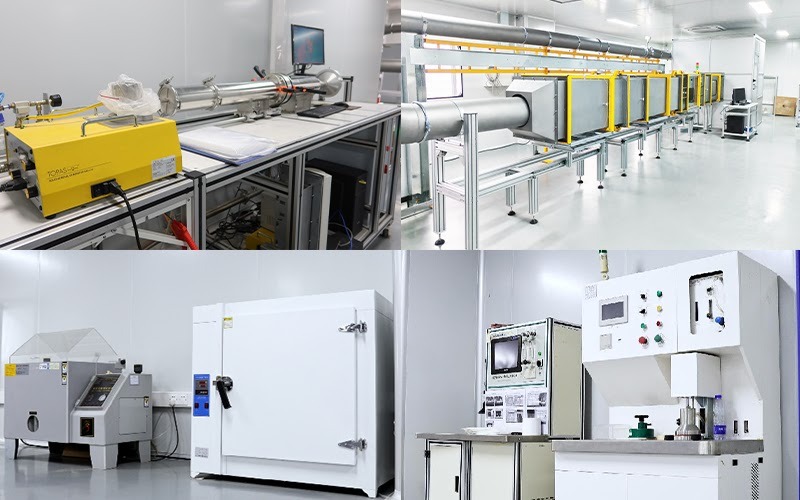
Meeting these standards is a good sign that the product is meeting benchmarks. Outside of compliance with these standards, there are a few indicators of product reliability and a company’s authority in the HEPA filter landscape.
SGS verification is one of the routes to conformity that companies like Clean-Link have taken to demonstrate going beyond the standards. This independent third-party company validates that product quality, performance and material integrity all reach high levels.
Unlike SGS, which has a very broad scope of coverage, another route that can be taken to show authority in an industry is specialist organisation memberships. For Clean-Link, this is NAFA Membership. Being a member of The National Air Filtration Association indicates adherence to industry best practices, access to professional certifications (CAFS/NCT), and a commitment to providing superior air quality solutions.
The quality of your HEPA filters can have major repercussions throughout the lifespan of your facility
Continuous research and development into filter technology
It is a balance of these certifications and memberships that conveys that a company is going above and beyond the bare minimum with their product development and production. In Clean-Link’s case, the company has been heavily focused in recent years on ensuring its HEPA filters are giving real-world benefits to users.
Product characteristics that the team have been optimising are low-pressure drop design and high dust holding capacity. Both these functions aim to reduce energy demands and extend lifespan, which are two cost-saving incentives for cleanrooms and labs. Reducing the energy usage of a system provides very obvious cost savings, but extending the lifespan of a filter is possibly an even greater benefit when it comes to Total Cost of Ownership (TCO). TCO looks at the cost of the product over its entire lifespan, rather than just at production, and the longer it lasts, the more the capital cost is spread out.
Product characteristics that the team have been optimising are low-pressure drop design and high dust holding capacity
Low pressure drop reduces resistance in the system, which means required air change rates can be reached without overloading the fan system. Clean-Link reports that its HEPA filters can reduce HVAC energy demand at equivalent airflow conditions. Cleanrooms with higher ISO Class levels, such as semiconductor fabs and certain pharmaceutical applications, can particularly benefit from this feature, as their fan systems are at higher risk of overload.
High dust holding capacity allows filters to accumulate more particulate before reaching its terminal pressure limits. This reduces the frequency of changouts, reducing the number of filters used, and thus, the TCO.
To achieve these functions, Clean-Link’s HEPA filters have a few specific characteristics.
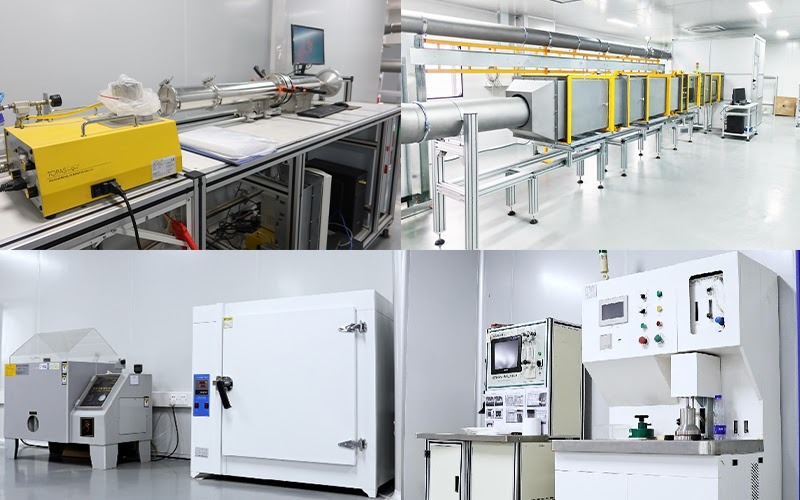
Firstly, the filters are designed to be “leak-free” with a “zero-bypass design”. To test this, Clean-Link uses German TOPAS systems, which is a rigorous 100% individual automated scan test that uses aerosols to scan for leaks. The company says that, unlike other companies, it does not solely rely on spot-checking.
Secondly, the pleat geometry is carefully engineered to maintain uniform air velocity across the filter face, reducing turbulence and improving overall airflow stability. The media is composed of ultra-fine glass fibres, enhancing particle capture efficiency while maintaining low resistance.
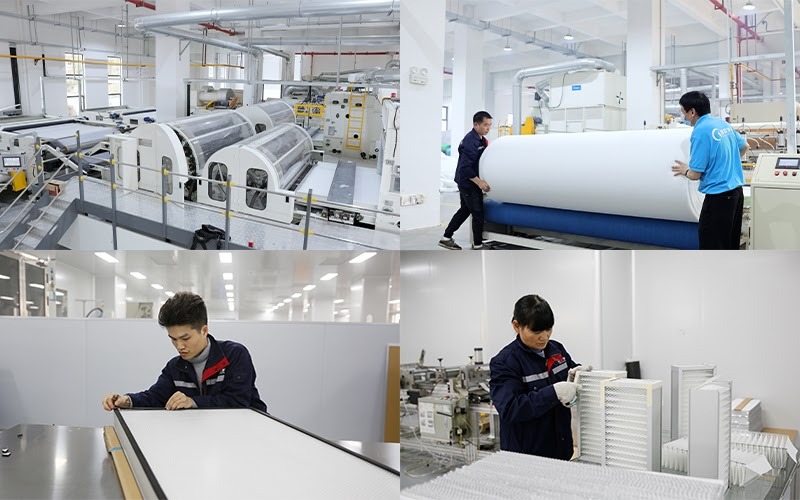
Finally, the filter has ultra-low operation resistance enabled by its pleat geometry and nature of the fibreglass material. These aspects, which vary from manufacturer to manufacturer, are essential to the pressure drop and dust holding benefits of a filter, and can help reduce fan energy demand compared with higher-resistance alternatives
As many cleanroom facilities around the globe are looking to reduce their carbon footprint, products that can reduce energy consumption are becoming more and more in demand. It is this key differentiator, whilst balancing a high performance, that shows the quality of a product.
A peek at Clean-Link’s business model
Beyond the quality of the product, it is important that a filter fits into a facility’s operations. Non-standard and custom sizes are a big part of Clean-Link’s business model. This capacity is enabled by the massive manufacturing scale of the company’s two facilities.
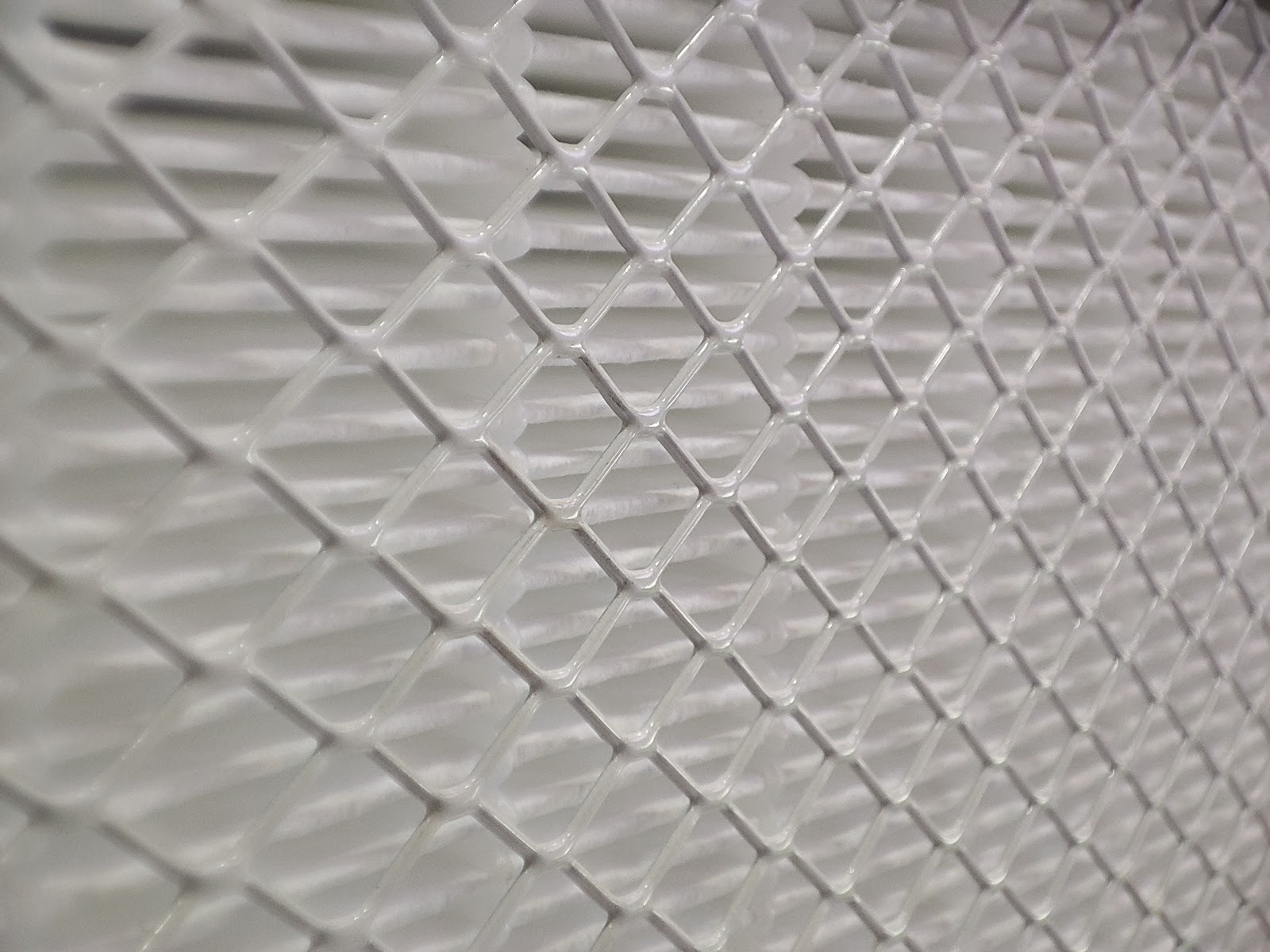
The cost associated with these products is also something that will be of great interest to users, as custom solutions can often be highly expensive. Clean-Link provides what they call “factory-direct pricing”, which uses its large-scale production capabilities to create custom orders without middleman markup.
Direct customisable solutions mean that there are shorter lead times for products. Shorter lead times allow project managers to better predict cost and timelines. This can be a particular benefit for large volume projects, where even small fluctuations can have significant impacts.
Non-standard and custom sizes are a big part of Clean-Link’s business model
All of this helps cleanroom managers to lower their TCO for these essential products. This can be a huge advantage for both the company and the environment.
Between its contributions to the wider sector and its customers, Clean-Link is working extremely hard to make good on its slogan of “Precision Filtration, Reliable Protection”. With this, the company aims to please its target clientele of companies in pharmaceuticals, semiconductors, biotech, medical device, healthcare, food & beverage, as well as paint baths.
For cleanroom operators balancing contamination control, energy performance, and service life, HEPA filter design is becoming a more strategic purchasing decision. Suppliers that can offer all of these reliably are increasingly well-positioned to support that shift.
Readers with project-specific requirements can contact Clean-Link for further technical information.


