
Background & Challenge
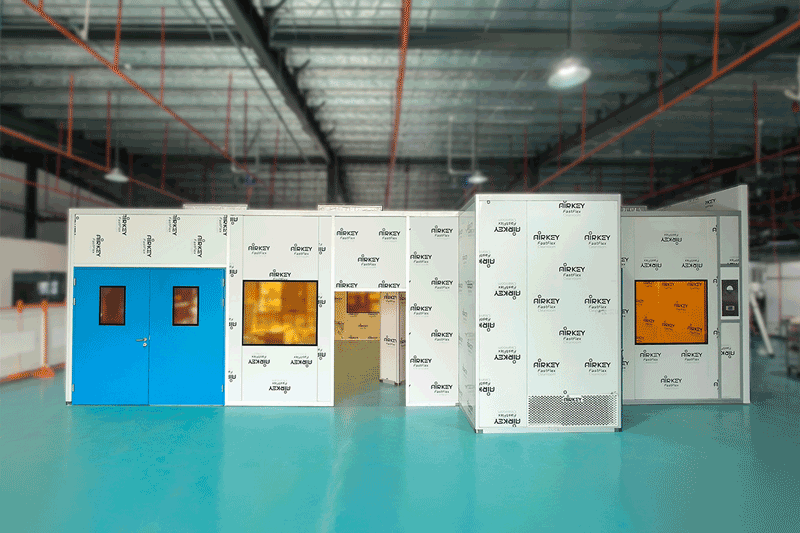
Following the successful implementation of a modular cleanroom for PCB printing, our client—a leading precision electronics manufacturer—tasked us with a more specialized mission: to build a dedicated, highly controlled ISO Class 6 (Class 1000) cleanroom for their core photolithography process.
Photolithography imposes exceptionally stringent demands on contamination control, environmental stability, and light safety. This was not merely a standard cleanroom build, but a systems engineering project requiring a deep understanding of the process principles and their translation into technical specifications.
The core challenges were:
Absolute Light Safety - Eliminating any risk of accidental exposure of photoresist to short-wavelength light (especially UV).
Superlative Particulate Control - Ensuring airborne particles do not settle on masks or wafers during processing, which would cause defects.
Precise Environmental Control - Providing a stable, uniform temperature and humidity field for consistent photoresist coating, exposure, and development.
The Solution: A Precision Environment Built for Photolithography
The delivered solution is a clean space meticulously tailored to the process, featuring several critical design elements:
1. Photolithography-Specific Safeguards: The Yellow Zone
Windows & Lighting
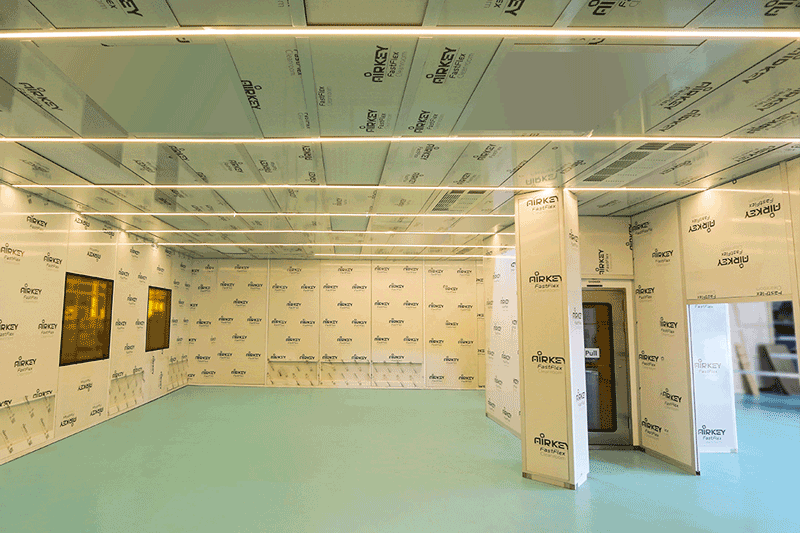
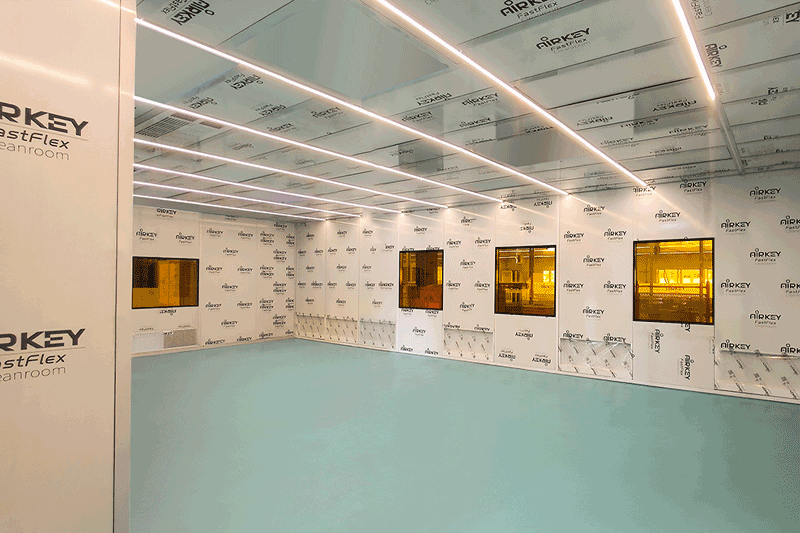
All viewing windows and the entire internal lighting system utilize yellow-tinted glass and yellow LEDs. This creates a safe “amber zone,” filtering out the blue and ultraviolet spectra that would pre-expose the sensitive photoresist, fundamentally protecting the integrity of the patterning process.
2. Robust Contamination Control Architecture
Structure
The cleanroom is constructed with rigid, non-shedding sandwich panels and fully sealed, tempered glass walls to ensure airtight integrity.
Airflow Management
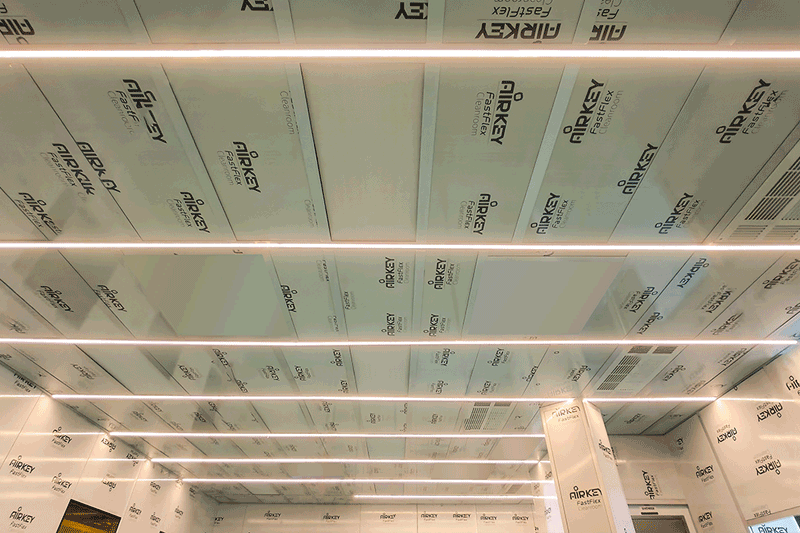
A dedicated HVAC system with high-efficiency particulate air (HEPA) filters supplies laminar downflow air. The air is then systematically recovered through grated air return panels, connected to a dedicated ducting network that returns air to the cleanroom, maintaining positive pressure and unidirectional flow.
3. Segregated Material & Personnel Flow
Personnel Entry
An anteroom equipped with an air shower serves as a mandatory decontamination chamber. Personnel must undergo a high-velocity air purge to remove loose particles before entering the main clean area.
Material Transfer
A pass-through box with interlocked doors allows for the safe introduction of wafers, chemicals, and tools without compromising the cleanroom’s internal environment.
4. Precise Climatic Conditioning
The integrated HVAC system is designed to maintain a tightly controlled environment:
Temperature:
20°C – 24°C (±0.5°C stability)
Relative Humidity:
40% – 60% (±5% stability)
This stability is critical for controlling photoresist viscosity, exposure kinetics, and developing rates.
Project Outcome & Value Delivered
“This project was more than just building another cleanroom; it was about deepening a partnership,” said Mr. Huang, Design Director at Airkey. “Our previous work on their PCB printing cleanroom established a foundation of trust. For this photolithography room, we leveraged our in-depth understanding of their workflow to deliver a customized solution that addresses the specific sensitivities of light-sensitive processes. From the yellow-light environment to the precise HVAC controls, every detail was co-engineered with the client’s production goals in mind.”