Also deliver the most comfortable level of heating and cooling
Hitachi’s RAS SX8 (S Series) room air conditioning units are said to destroy 99.9% of airborne viruses and bacteria, while delivering the most comfortable level of heating and cooling. The sleek, wall-mounted units are also energy efficient and cost-effective to operate, the firm says.
The S Series units kill airborne viruses, bacteria and odour by generating ionised mist from the air in the room.
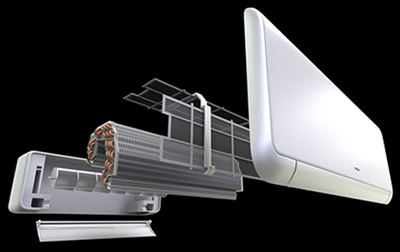
Each unit automatically cleans its micro-mesh stainless filter once the air conditioning operation has ended; removing dust from the filter and collecting it in a dust box. Its internal cleaning operation also controls mould growth.
Hitachi says the units are energy-efficient, having a Coefficient of Performance (COP) of 6.13 and EER of 6.0, and cost around £18 a year to run.
The units also offer cutting-edge temperature control, which monitors and controls all aspects of the air humidity and air quality. Its DC inverter technology allows a room to reach the required temperature rapidly ensuring maximum user comfort. The inverter technology then adjusts the speed of the system’s ‘Eco-Scroll’ compressor to an energy saving mode, in order to maintain the desired temperature as efficiently as possible.
A ‘Real Dry’ function sets humidity levels within the room at 40–70% (in 5% increments). It also enables noise levels of 20dB(A).
Glyn Jones, UK product marketing manager at Hitachi, said: “The S-Series is air conditioning at its very best – from its compact stylish design to its abilities to save energy, money and eliminate bacteria.”