

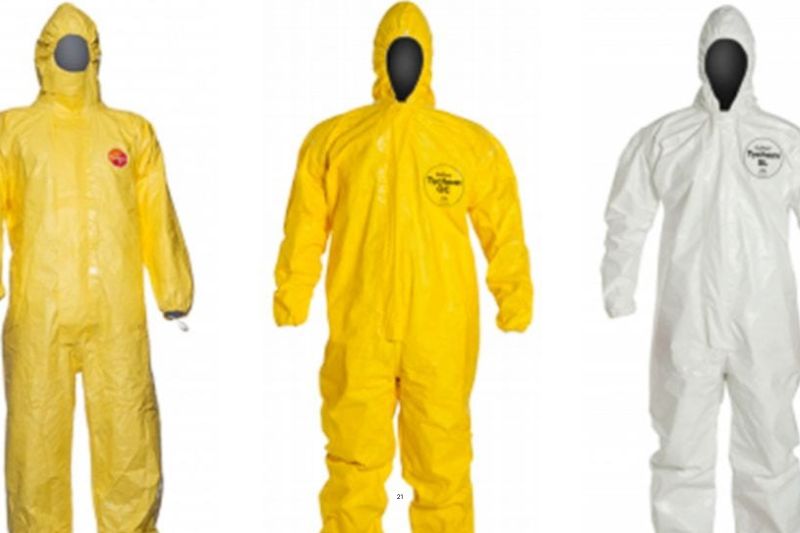
Global manufacturers are rapidly increasing PPE production to combat the Bundibugyo Ebola outbreak in the Democratic Republic of Congo (DRC) and Uganda.
Key suppliers, including DuPont, Lakeland Industries, Honeywell and Draeger are accelerating production lines and authorising additional factory shifts to meet surging demand for hazmat suits.
“While we have more than tripled production of our most relevant products to address the unprecedented level of demand, that demand is now exceeding our supply for specific products,” said David Domnisch, Global Marketing Manager of Protective Apparel at DuPont Protection Technologies.
DuPont Protection Technologies has been collaborating with Médecins Sans Frontières (MSF), the World Health Organization (WHO), Centers for Disease Control and Prevention (CDC), the US Military and other organisations involved in the response to address the demand for our personal protection garments in the impacted region.
DuPont has already tripled the production of the most relevant protective garments to organisations involved in the response.
The company has also provided information on biological protection to assist in the proper selection and use of our personal protection garments.
“The Ebola crisis is leading to discussions with government agencies such as DLA and CDC on future innovations and options to increase levels of preparedness,” said Domnisch.
Specifics of the Ebola outbreak
Ebola virus disease is transmitted through direct contact with the bodily fluids of infected individuals, making healthcare settings particularly vulnerable to onward transmission if appropriate controls are not in place.
According to WHO Director-General, Dr Tedros Adhanom Ghebreyesus, the “outbreak is continuing to outpace the response.”
As of 24 June, there are 1094 confirmed cases and 277 deaths.
The US CDC said that examples of PPE used for Ebola include (but are not limited to) gloves, gown/coverall, mask/respirator, apron, faceshield/goggles, and cap/hood.
“The large scale of the epidemic, as well as the two healthcare workers who contracted Ebola while caring for the first case in the US, has directed particular attention to the PPE used by healthcare workers to reduce their risk of infection,” CDC said in a statement.
Previous Ebola outbreaks have demonstrated the heightened risk faced by healthcare workers, especially during patient treatment, specimen handling and waste management activities.
In response, healthcare facilities are implementing enhanced infection control protocols, including the use of full-body PPE ensembles, respiratory protection, gloves, face shields and impermeable gowns.
Dedicated isolation areas and controlled patient pathways are also being established to minimise the risk of cross-contamination.
Environmental decontamination remains a key component of outbreak management.
Surfaces, equipment and clinical waste must be handled and disinfected using validated procedures designed to eliminate viral contamination and prevent secondary transmission.
Training and adherence to established protocols are also considered essential.