
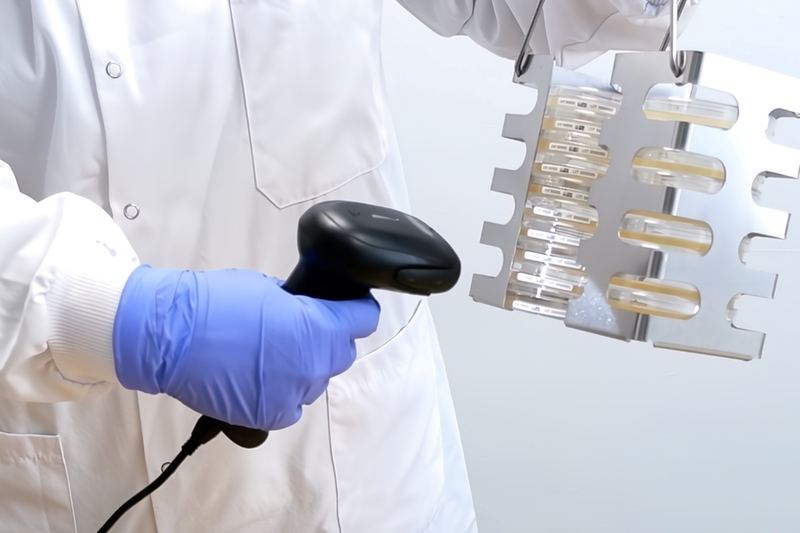
In sterile pharmaceutical and medical product manufacturing, a robust contamination control strategy (CCS) is essential to ensure consistent product quality and safeguard patient safety. Microbial environmental monitoring (EM) plays a key role in this, and the tools used must support both operational efficiency and compliance with regulatory requirements.
Manufacturers of sterile medicinal products ultimately need to maintain control over microbial contamination risks, while ensuring compliance with regulatory standards. As GMP guidance (EU GMP Annex 1) continues to emphasise data integrity, proactive risk management and contamination prevention, switching to locking lid culture media plates could offer a simple yet impactful way of increasing the reliability and efficiency of EM programmes.
The importance of sample security
Sample security is crucial in environmental monitoring for pharmaceutical and medical product manufacturing. A key component of an effective contamination control strategy is not only the sampling and data review process, but also the quality and security of the sample itself right from the point of collection.
Sections 2.3 to 2.7 of EU GMP Annex 1 specify that contamination control should ensure both proactive risk management and reliable data integrity throughout the monitoring process. Microbial EM results provide the evidential basis of sterility assurance for this, supporting batch release decisions and trending analyses. So, any uncertainty or integrity risk in a sample will undermine confidence in the data and the CCS as a whole.
The risks of standard plates
Microbial EM relies heavily on culture media plates. Settle plates are used to capture airborne contaminants in controlled areas, while contact plates capture samples from surfaces and gowning. Although use of traditional standard plates is well-established, they do come with limitations that can affect both regulatory compliance and efficiency.
Due to their loose-fitting lids, standard plates are fundamentally at risk of sample compromise. These lids can easily be accidentally dislodged during transportation, or because of mishandling – a particular risk for contact plates, which tend to be handled more frequently. Even when handled carefully, there is always a risk of lid displacement which will affect sample integrity, particularly in a busy laboratory environment.
In addition, the need for manual data entry can potentially introduce errors – even if a standard plate has a GS1 DataMatrix label, this is generally located underneath, making scanning inconvenient with risk of lid displacement too.
Any incidents that might compromise sample integrity can cast doubt on results, requiring repeat sampling and triggering deviation investigations, increasing costs and creating extra work for already busy QA/QC teams.
The case for locking lid plates
Locking lid culture plates, such as Redipor (registered trademark) TwistLock Plates (AnalytiChem) (Below), offer a simple and practical way to overcome the vulnerabilities of standard plates, improving both sample security and overall efficiency. These plates feature a secure locking mechanism that prevents