
Thermal degradation pathways such as oxidation, hydrolysis, or molecular breakdown are often triggered by heat. Even physical characteristics like colour, crystal form, and particle morphology can be altered irreversibly. To ensure consistent product quality and maintain efficacy, precisely controlled drying conditions are essential.
Drawbacks of High-Temperature Drying
Conventional methods of drying at atmospheric pressure often demand high temperatures to achieve solvent removal. For temperature-sensitive compounds, this approach presents significant risks, including irreversible loss of biological activity or formation of unwanted by-products. Overheating can trigger several degradation mechanisms:
- Chemical breakdown of active ingredients
- Denaturation of biological molecules
- Loss of volatile components, such as flavours or essential nutrients
- Discoloration or polymorphic transformation of API cakes
For example, some APIs begin to change colour when exposed to temperatures above 80°C, while aspirin crystals exhibit decomposition between 110–120°C. To avoid these risks, operating well below such thresholds is critical. These observations highlight why high-temperature drying cannot reliably maintain the integrity of delicate pharmaceutical or biotechnological products (1).
How Vacuum Drying Prevents Degradation
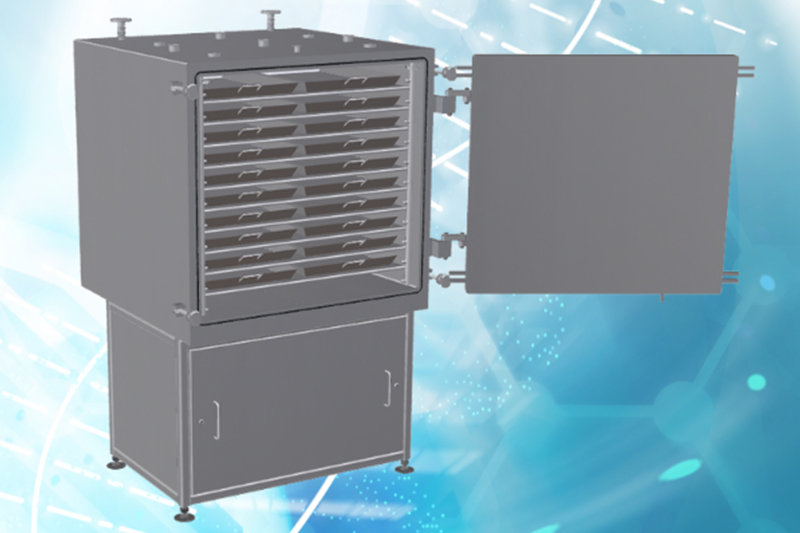
Vacuum drying operates on the principle that reducing pressure lowers the boiling point of the solvent. Under vacuum, water and organic solvents evaporate efficiently at far lower temperatures than under atmospheric conditions. Using a vacuum cake dryer with direct heating shelves enables rapid solvent removal while maintaining gentle thermal conditions.
By avoiding high temperatures and minimising exposure to oxygen, vacuum contact drying offers a controlled environment that preserves product stability and potency. This method delivers high thermal efficiency, as most heat energy is transferred directly into the product with minimal loss, and significantly reduces degradation risks.
Vacuum drying is particularly suitable for:
- Thermo-sensitive APIs and intermediates
- Oxygen-sensitive compounds
- Products that require strict control of residual solvent content
This low-temperature approach ensures chemical and structural preservation, supporting both product quality and regulatory compliance.
Applications and Case Examples
Low-temperature vacuum drying is a cornerstone technique across high-value industries:
- Pharmaceutical APIs: Vacuum contact drying enables simultaneous filtration and drying of solids under controlled conditions. For APIs, vacuum operation prevents decomposition and crystal form alteration while achieving required solvent specifications.
- Biotechnology and Food Sectors: Bioproducts such as enzymes, probiotics, and nutritional supplements retain biological activity through vacuum or freeze drying. Food ingredients like vitamins or fruit extracts maintain natural flavour and colour when processed under vacuum rather than heat-intensive drying.
- Advanced Materials Manufacturing: In industries like battery production, vacuum drying prevents moisture- or heat-induced degradation of sensitive electrode materials, ensuring stable electrochemical performance.
Across all these sectors, precise control of temperature and pressure defines the difference between successful drying and irreversible degradation.
Explore Vacuum Dryers from PSL
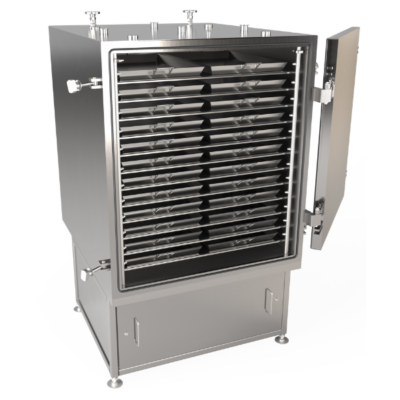
A low-temperature, vacuum cake dryer is ideal for safeguarding product integrity during drying. By operating under vacuum, it enables solvent removal at reduced temperatures, eliminating thermal stress and preserving the molecular characteristics of sensitive products.
The Powder Systems Ltd (PSL) CakeStand™ Vacuum Tray Dryer exemplifies this approach, combining direct-heated shelves with modular vacuum chambers to achieve uniform, gentle drying conditions. For manufacturers seeking to prevent product degradation and enhance process reliability, adopting a low-temperature vacuum system is a decisive step toward superior quality and process consistency.
Find out how the CakeStand™ Vacuum Tray Dryer and learn how it can transform your drying process through efficient, safe, and product-protective operation.
References
Li, Wei. Drying of Pharmaceutical Powders Using An Agitated Filter Dryer. The University of Leeds. Institute of Particle Science and Engineering. 2014.