

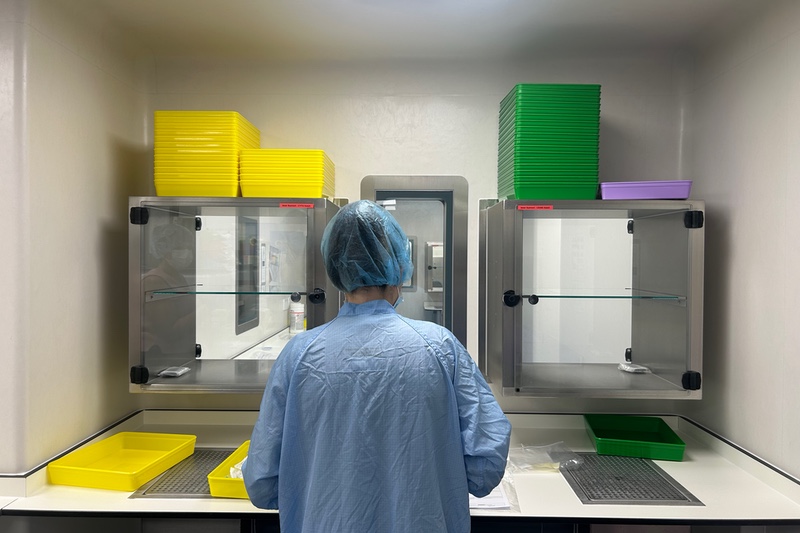
Asking a question about a cleanroom is often like asking, “how long is a piece of string?”.
Take Cleanroom Technology’s recent tour of King’s College Hospital’s Aseptic Services unit as an example, and compare it to a Big Pharma production cleanroom. Both manufacture medicine, but the product, the process, and even the environment vary wildly. NHS cleanrooms’ products are “ready-to-administer”.
The tour took a look at the two cleanrooms in the hospital’s lower ground floor that form the aseptic pharmacy. There is also a modular unit onsite. This unit operates under what is commonly referred to as a “Section 10”.
Section 10 of the Medicines Act 1968 allows NHS hospital pharmacies to prepare medicines for pharmacy for their own patients without holding a commercial manufacturing licence. Section 10 units supply patient-specific aseptically-prepared medicines within a tightly regulated quality and safety framework.
So if you are in Quality Assurance/Quality Control, there is a huge difference in operation between this and major pharmaceutical production.
Unlike pharmaceutical factories that produce thousands of identical products, the individualised prescribed nature of the product requires different processes. Every prescription requires its own documentation, checking, preparation, pharmacist approval and release before it reaches a ward.
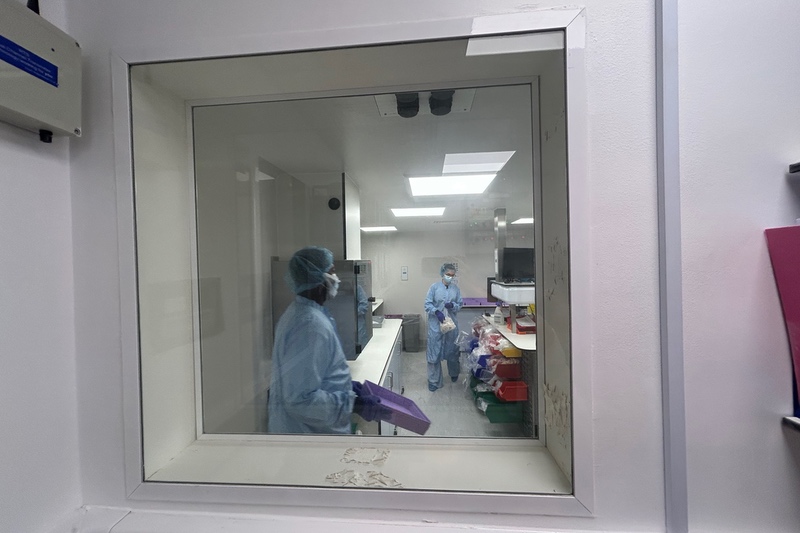
A view into the cleanroom
A new update to the Section 10 standards (the 6th edition) is expected Q4 2026, with a focus on aligning NHS aseptic units more closely with updated sterile manufacturing expectations, including elements introduced through Annex 1 of EU GMP Chapter 4. Members of the King’s College Hospital team have been involved in working groups contributing to the development of the updated guidance, giving them early insight into potential changes.
The unit's team is now preparing for this update through gap analysis and planning to understand what changes may be required while ensuring improvements can be introduced sustainably without placing unnecessary pressure on day-to-day operations.
Quality Assurance services brought in-house
The tour was being given by Hélio Fazenda, Chief Pharmacy Technician, as well as Sam Mensah, Pharmacy QA Specialist (Aseptic Services) at King's College Hospital NHS Foundation Trust.
Mensah was keen to talk about how the unit brought quality assurance support in-house about three years ago. He explained that prior to this, the work had been outsourced, but that the team made a good business case for the investment to establish their own team.
The team reasoned it would create a more efficient process that would reduce reliance on external providers, and provide savings within a short amount of time.
One of the ways the team improved QC efficiency was streamlining incubation processes and implementing in-house physical environmental monitoring. Mensah said thankfully they already had an incubator for the unit, and they already incubated their plates/broths, so with his expertise from a previous trust, he and a colleague just “ramped up the process as simply as possible”.
Without having to organise and accommodate a third party, the efficiency of this small environment has seemingly improved.
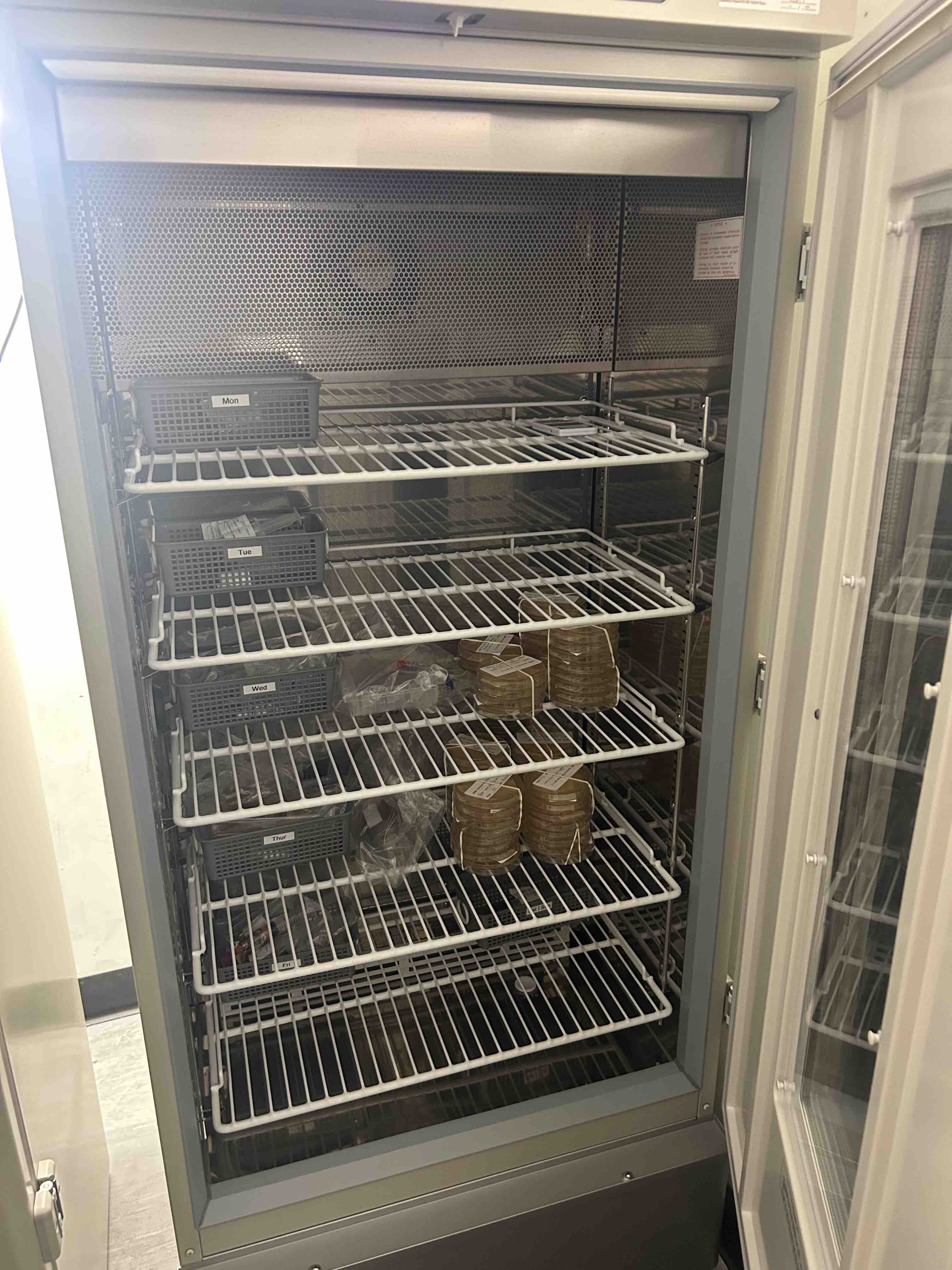
The unit's incubator
Mensah explains that as a result, in the last few years the unit has had better audit performance than ever. The Unit was already “low risk”, but as Mensah says “you can still be low risk and have majors”.
Majors in this context mean deviations beyond the set limits of contamination control. “We had a couple of majors maybe three years ago, but since [then we are] flying higher with just others,” he enthuses.
From the operator perspective, there are also a few tests that take place at intervals, daily and further apart.
Operators complete a broth transfer assessment every six months to demonstrate their aseptic technique. In addition, every morning and afternoon session finishes with an end-of-session broth test to confirm the isolator maintained its suitability throughout the work.
On the more admin side of things, Mensah also introduced and updated spreadsheets and workflows to improve the paper trail for monitoring the environment.
Cytotoxic control in the design
Another interesting aspect of this unit is that it intends not just to protect the product, but also to protect the operator.
Cytotoxic medication, such as chemotherapies, could cause potential harm to the operator if there was unintended contact. The measures to keep both operator and product safe include the room itself, as well as the equipment in it, primarily the isolators. Preparation of the medicines is mainly performed inside these isolators, to minimise risk.
Beyond the isolators themselves, the cleanroom actually has its own dedicated ventilation system. The Air Handling Unit (AHU) is separate from the rest of the hospital’s, despite the pharmacy’s location in the basement.
The isolators are actually “ducted” into this ventilation system, meaning they are all connected.
Regular maintenance is needed to keep the AHU clean. Fazenda gives the example of the upcoming AHU replacement at the hospital. Comparing the system to a phone battery that slowly loses capacity over the years. The plan is to replace it with a more powerful unit to future-proof the cleanroom.
Sufficient gowning processes are also a big part of contamination control in these areas.
Over the years, the working process in cleanrooms has been to overperform in all areas to ensure as little risk as possible. However, it is clear that this thought process can’t continue if the environment is to be given due consideration.
As such, King’s went for what Mensah calls a “minimal approach”, but it is far more than that. Rather than introducing additional gown changes between adjacent clean areas, the unit relies on hand disinfection, targeted glove changes where required and environmental monitoring data to demonstrate that the process remains effective.
An interesting thing that was noted here was visual clues to remind staff to disinfect their hands. A bench was placed as a barrier within the cleanroom between production areas. On this bench was the disinfectant. As the staff stepped over, they sprayed their hands.
This is an innovative way to ensure operator compliance, with a physical reminder. This measured approach has been reviewed by regional QA and approved. Mensah is pleased with the reduction in resource use this has created.
Mensah explained that too many coat changes can actually increase particulate output. So instead, they try to keep it “very simple”.
“It works!” he says.
Why do you need a “Section 10” in a hospital?
A good question to ask about facilities like this, is why is there a need for them? Why does Section 10 even exist? Why can’t the hospital just outsource production of all of their medicines? The answer to this lies in shelf-life and precision.
Some medicines, such as chemotherapies, have extremely short shelf lives, down to as low as 90 minutes. For these, communication with wards for delivery times is key, and may result in common failure even if from a nearby facility.
Speaking to Laura Morgan, Associate Chief Pharmacist of the unit, she says that the team prepares about 110 individual medicines/products on an average day. Around two thirds of that is chemotherapies or anti-cancer medications, and the remaining third is a few other products, but mainly parenteral nutrition (PN).
PN is IV nutrition bags that deliver all essential nutrients for a human directly into a vein, bypassing the digestive system.
An essential hospital product, TPN is actually just modulated in the unit's cleanrooms. This is where the precision need is displayed; each bag is given specific amounts of vitamins and trace elements, tailored to the patient.
Less haste, more speed
With large numbers of medicines going through the process, it is not just the team in the support office that needs to keep calm and schedule things. The production team also need to remember to keep calm.
Morgan stresses that despite supporting urgent patient care, the unit cannot simply “rush” medicines.
Preparing a product involves documentation, aseptic preparation, checking and final release by an authorised pharmacist, with even routine products typically taking several hours from start to finish.
“You’re supposed to move slowly, carefully and considerately in a cleanroom [to reduce particulate contamination risk],” she said. “If we rush products, we increase the risk of every single activity.”
For this reason, there is no priority pathway for medicines within the hospital. Rather than speeding up production, the service adjusts schedules in advance wherever possible.
Operator concentration is also key to maintaining the aseptic conditions inside the unit’s cleanroom.
Fazenda said that “avoiding fatigue” is why there are regularly scheduled breaks.
Interestingly, concentration is the reason there is no music allowed in the unit too. “Some places do play music, but not here,” he said.
The lack of distraction is key to the jobs, and music can be seen to help or hinder this. But having a policy is key.
Future changes to King’s College Hospital cleanrooms
Beyond the AHU upgrade, the aseptic services unit also has a remote cleanroom on the hospital site that they are making upgrade plans for.
The unit is exploring changes that will support emerging advanced therapies, including gene therapy (advanced therapy medicinal products).
These therapies are becoming more and more of a reality in today’s healthcare landscape.
CGTs/ATMP are a spark of hope for many with chronic and fatal genetic diseases. But the cleanrooms required for these futuristic facilities are vastly different to those already in play at the unit.
These products are also personalised with a shelf-life due to their biological nature, so perfect for this kind of unit. However, enabling this change would necessitate converting the remote cleanroom from a positive to a negative pressure one, with a pressure cascade system to reduce contamination risks, to ensure it is fit for purpose.
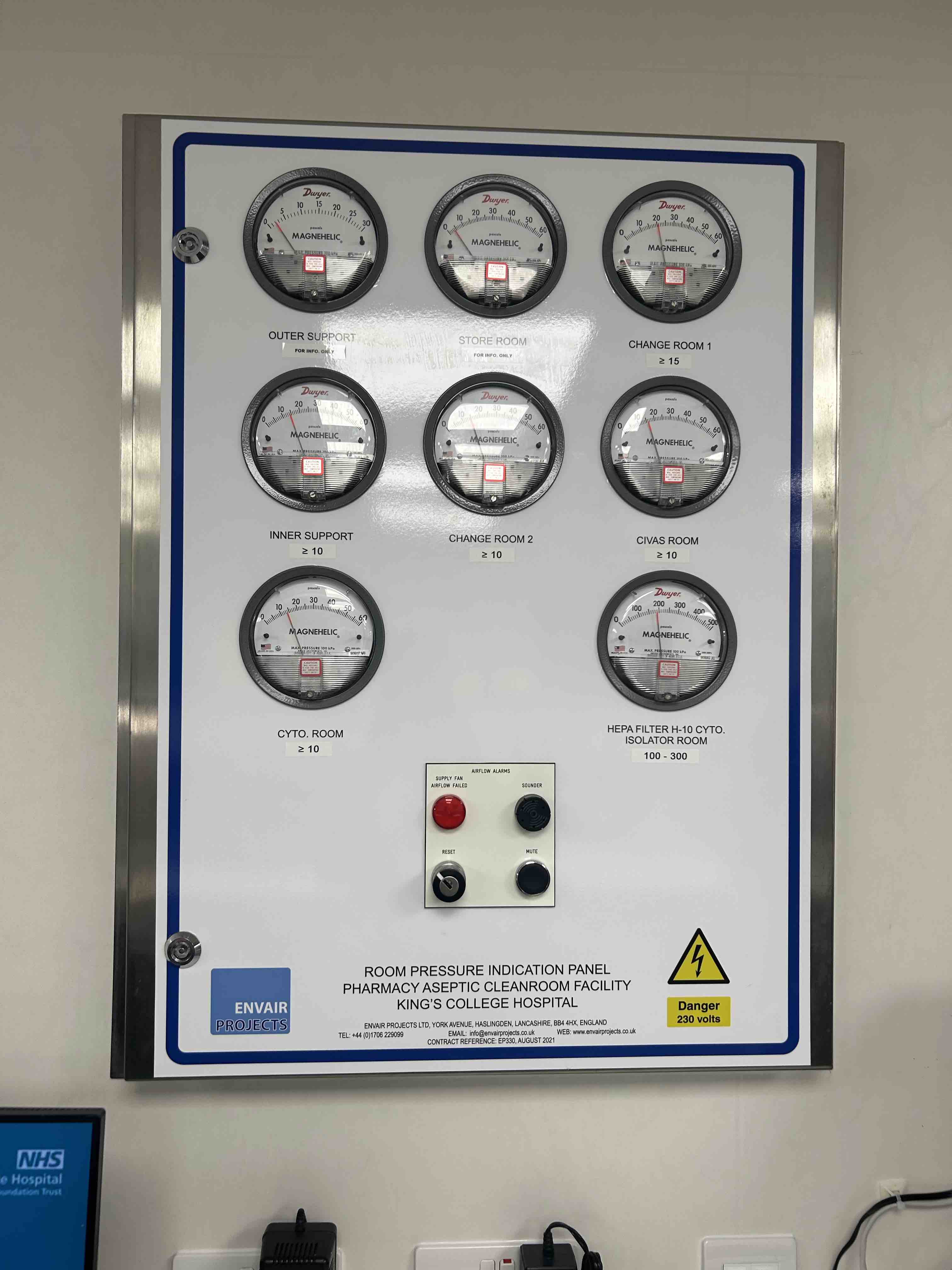
The cleanroom's pressure hub
These developments will require careful planning, balancing regulatory expectations with operational pressures, staffing capacity and available funding.
Both Fazenda and Mensah emphasised that changes will be introduced gradually, using gap analyses and risk assessments to ensure improvements can be implemented without disrupting patient care.
But the spark is lit, and it is exciting to see where it will spread.
Images credit: Sophie Bullimore


