

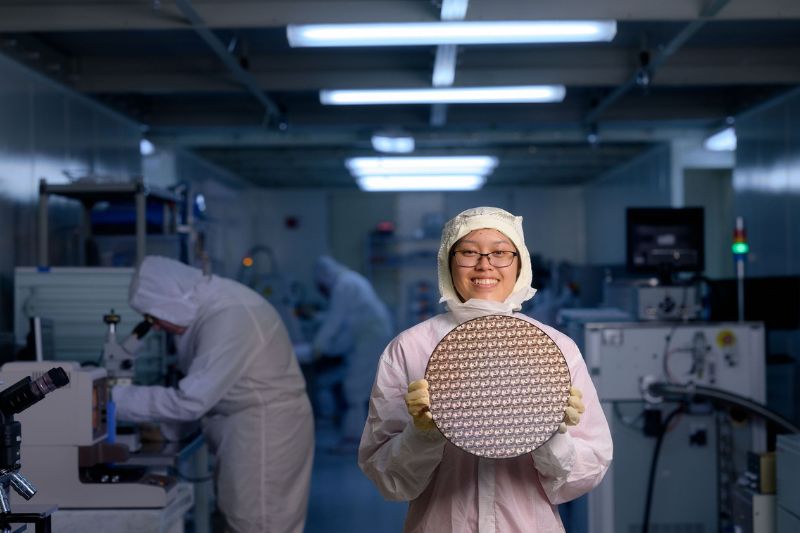
The University of Arizona has completed a $35.5m expansion of its Nanofabrication Core Facility cleanroom, significantly increasing its capacity to support semiconductor research, device engineering, and advanced technology development.
The 6,500 sqft cleanroom will play a major role in the university’s microelectronics, optical device fabrication, and quantum systems research, and will provide students with hands-on training opportunities for entering the semiconductor workforce.
The project enhances the Nanofabrication Core Facility, operated by the university’s Office of Research and Partnerships and the Center for Semiconductor Manufacturing.
University leaders say the upgrade significantly strengthens the institution’s ability to support advanced semiconductor research, device development, and workforce training.
“This strategic investment has transformed one of our core research facilities,” said Tomás Díaz de la Rubia, Senior Vice President for Research and Partnerships at the University of Arizona.
He added that the expanded facility will play a role in advancing secure research linked to national security priorities while reinforcing Arizona’s position in semiconductor innovation.
The expansion has been supported by the Arizona Commerce Authority, reflecting broader state-level efforts to grow domestic semiconductor capabilities and technical talent pipelines.
Advanced contamination control and research capability
The cleanroom has enhanced contamination control and additional capacity for nanofabrication processes, device processing, and materials characterisation.
The Nanofabrication Core Facility supports a range of disciplines, including semiconductors, microelectronics, optical devices, and quantum computing systems.
Designed as an open-access environment, it offers industrial-grade infrastructure and specialist equipment to users from academia, federal agencies, and private-sector organisations.
Focus on digital and immersive training
In addition to the physical infrastructure, the expansion includes new digital and immersive training technologies.
An opening ceremony that will take place on February 17 will include demonstrations of a digital twin cleanroom designed for undergraduate training.
It will also include guided tours of an augmented reality classroom featuring AR headset applications.
University officials say these capabilities are intended to bridge the gap between academic study and industry practice, enabling students to gain familiarity with complex fabrication environments and workflows before entering the technology sector.


