
Results of the LCA Study
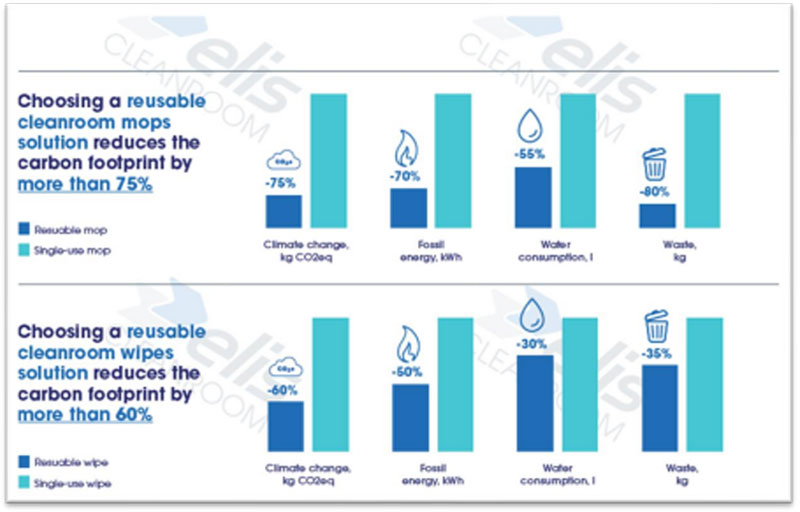
- Reusable mops/wipes show superior performance compared to single use in all 16 impact areas evaluated.
- Up to 75% reduction on climate change, 70% on fossil energy use, 55% on water consumption, and 80% on waste generation for mops.
- Up to 60% reduction on climate change, 50% on fossil energy use, 30% on water consumption, and 35% on waste generation for wipes.
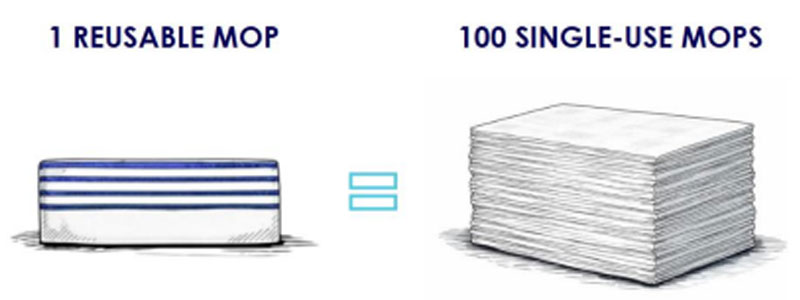
- One reusable mop replaces approximately 100 single-use mops over its lifetime). This helps reduce waste generation from single-use products by 80%.
Life cycle assessment to compare reusable versus single-use cleanroom mops and wipes
LCA is a standardized method (ISO 14040 and ISO 14044) to assess the potential environmental impact of a service (product or activity) by identifying the physical flows of materials and energy throughout its life cycle.
Evea Consulting realised a comparative LCA (Life Cycle Assessment), evaluating the environmental impacts of reusable versus single-use cleanroom mops and wipes in cleanroom settings. The study was conducted in 2024 and adopts a "cradle to grave" approach and includes the full life cycle of mops and wipes: raw materials, manufacturing, transportation, decontamination, and end-of-life.
Critical review process of the study
The LCA underwent an external critical review to ensure compliance with ISO standards.
- The review was conducted by a panel of 3 members: LCA and Cleanroom experts.
- It assessed the report's quality, data accuracy, methodology, and conclusions.
- The critical review process ensures transparency and objectivity in the LCA findings.
In addition to the proven environmental benefits, a circular solution for cleanroom cleaning from Elis guarantees:
- High quality microfiber products for effective bacteria and particle removal
- Specialized cleanroom laundry with minimal risk of cross-contamination)
- Security of delivery due to our own vehicle fleet and thorough back-up plans)
- Full service (flexibility in adjusting your assortment, advice and training) 5. Less administrative work like ordering, storage, distribution, etc.
- Better visual impression due to less waste, trash bins, etc.
- A cost-effective solution with total cost of ownership in mind
- Benefits for local society by creating jobs and being close to the customer