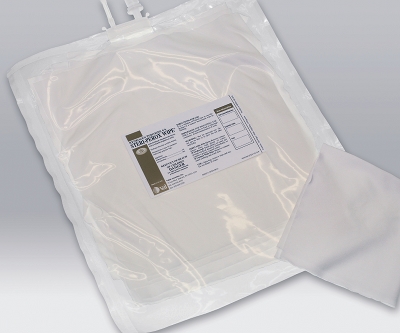
Product family is impregnated with active sterilising substances
PMT(GB)’s ready-to-use sterile wipes are impregnated with active sterilising substances and have been specifically developed for aseptic manufacturing areas within the pharmaceutical industry.
Two innovations within this product family are the Steri-Perox wipe and the Hypo-Chlor wipe. Steri-Perox wipes are saturated with 6% hydrogen peroxide, while Hypo-Chlor wipes are impregnated with either 0.25% or 0.52% sodium hypochlorite solutions.
The manufacturing process is based on PMT’s patented Asepti Fill sterile filtered filling process. The sterile filter used in this process is an integral part of the wipes packet.
The Process2Wipe, pre-saturated iso-propanol (70% IPA) wipes and sterile dry wipes (WipeDown) complement the product series.
All wipes feature extremely low particulate shedding and good liquid absorption, the company says.
PMT guarantees traceability for all products and complete documentation for each batch, with certificates for conformance and sterility in accordance with the current USP standard.