
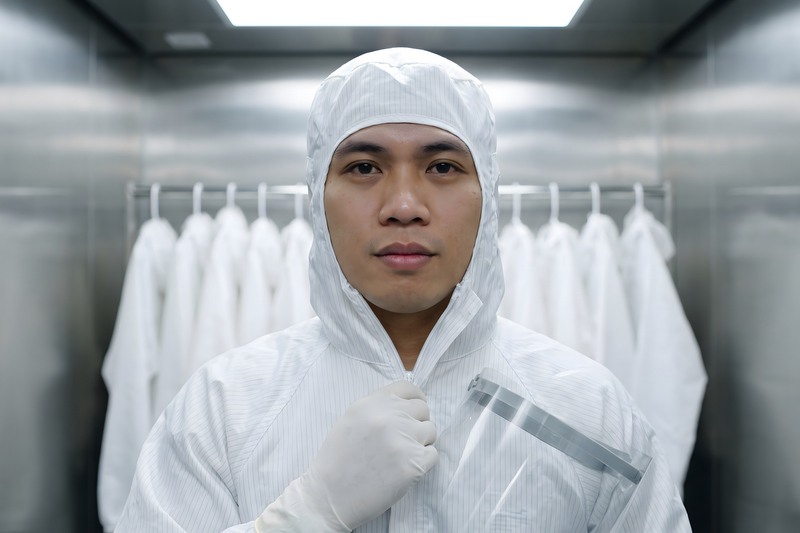
In environments where ISO 14644 is front of mind, meeting the highest hygienic standards is one of the greatest design and operational challenges. Cleanroom performance is judged on air particle concentrations, but achieving and maintaining consistently low particle counts depends on more than filtration and airflow.
Every element of the workspace has to be carefully considered to maintain a risk-free environment, and that includes the changing, or gowning, room.
When someone arrives at work, they are simply themselves. But once they cross the threshold into a controlled environment, they become part of the Contamination Control Strategy (CCS).
In cleanrooms and laboratories, this shift in mindset is critical. Contamination awareness must begin before anyone enters the classified space, and the gowning room is where that switch happens. Done well, it is the first and most important stage of cleanroom contamination control.
The gowning room as a contamination control system
Cleanroom hygiene is measured and monitored by the airborne particle count, and the first stage in developing a CCS is understanding the sources and potential impact of those particles on product, process, or patient safety.
In pharmaceutical manufacturing or operating theatres, particles can be a life-or-death matter.
In IVF or blood laboratories, bacteriological contamination can destroy valuable life science processes.
In high-tech manufacturing, a single dust particle may be enough to cause equipment malfunction or failure.
Designers and operators must therefore ask three fundamental questions: what particles might enter the space; where might they come from; and what damage could they do? While a fibre from clothing will remain inert, something biological may multiply (colonise) and spread, causing devastating consequences.
Congested gowning rooms encourage shortcuts, and shortcuts defeat even the best technical controls
Cleanroom technology relies on three pillars: design and build, defining what must be constructed and installed to control contamination; testing and monitoring, defining protocols to ensure the cleanroom performs as intended; and operations, encompassing a multitude of user aspects such as gowning, conduct and cleaning disciplines.
People represent the greatest contamination risk in cleanrooms. The average person sheds thousands of skin cells every minute (over a billion per day) through the natural process of desquamation. The primary function of the gowning room is therefore to reduce contamination from people and materials from entering the classified space.
From uncontrolled to classified: managing the transition
Every cleanroom should employ a


