
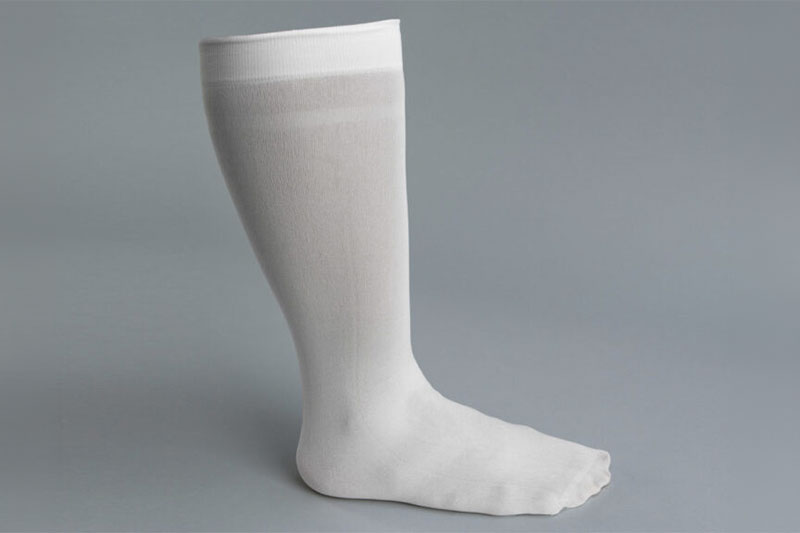
Everyday socks can introduce particles, fibres and microorganisms into controlled environments. For facilities where contamination control is critical, replacing personal socks with dedicated cleanroom socks provides an additional barrier between the operator and the cleanroom environment.
Why are cleanroom socks important?
People are one of the biggest potential sources of contamination within a cleanroom. Clothing and footwear can carry particles, fibres, hair and microorganisms into controlled areas, making effective gowning procedures essential.
Ordinary socks are generally made from materials and fibres that are not designed for controlled environments and can shed particles during movement. Cleanroom socks, by comparison, are manufactured from materials selected to minimise particle and fibre shedding. Many are made using continuous filament synthetic fibres, which can provide a lower-shedding alternative to conventional cotton or polycotton socks.
Cleanroom socks can also help prevent contamination from being transferred into cleanroom footwear. By providing a dedicated layer between the operator’s feet and cleanroom shoes or clogs, they form another part of the overall contamination-control strategy.
Cleanroom socks and EU GMP Annex 1
The importance of dedicated facility socks has been highlighted by the revised EU GMP Annex 1, which states that outdoor clothing, including socks (other than personal underwear), should not be brought into changing rooms leading directly to Grade B and C areas. Facility socks should be worn before entering these areas and should not present a contamination risk to the gowning area or processes.
For pharmaceutical, biotechnology and other highly controlled environments, this makes cleanroom socks an increasingly important consideration when reviewing gowning procedures.
The exact sock specification required will depend on the application and cleanroom requirements. Options can include disposable or reusable socks, with features such as low particle generation, cleanroom laundering, autoclavability and, where required, ESD properties.
Choosing the right cleanroom socks
When selecting cleanroom socks, it is important to consider more than simply whether they are labelled as “cleanroom suitable”.
Key factors to consider include:
- Material: Synthetic, low-shedding materials can help minimise particle generation.
- Particle performance: Look for products that have been tested for particle generation using appropriate methods.
- Cleanroom processing: Laundered and cleanroom-packaged products can help minimise contamination before use.
- Comfort and fit: Operators may wear socks for extended periods, so comfort, sizing and a secure fit are important.
- Sterility: Where required by the process, sterile or autoclavable options may be appropriate.
- ESD requirements: Electrostatic control may be important in certain manufacturing and electronics applications.
- Gowning procedure: Socks should form part of a clearly defined and validated gowning process rather than being considered in isolation.
How CES can support your cleanroom gowning requirements
At CES, we supply cleanroom socks alongside a comprehensive range of cleanroom apparel, PPE and consumables, helping you source the products you need to support effective contamination control from one supplier. Our team can help you identify products suited to your specific cleanroom, application and gowning requirements.
Looking to review your gowning process? Explore the CES Cleanroom Socks range or speak to our team to discuss your requirements.


