
In sterile pharmaceutical production, cleanroom quality plays a crucial role and must be monitored continuously. Alongside particle measurement, viable monitoring is a key priority. New, automated systems help minimise the risk of contamination while simultaneously increasing productivity – as a retrofit project from Syntegon and an international CDMO shows.
Robust sterile processes are essential to maintaining the quality of parenteral pharmaceuticals. A key factor influencing these processes is the condition of the production environment. Any step involving the aseptic processing of sterile products, ingredients, containers, carriers, or components must take place in a cleanroom environment, as defined in detail by relevant ISO standards and regulations such as EU GMP Annex 1 or FDA GMP Guidance. Criteria for particle concentration and size are specified to achieve a certain cleanroom class.
Particle measurement and viable monitoring
Stable quality in the production environment requires controlled temperature and humidity, continuous air exchange, a defined air flow, and regulated positive pressure relative to the environment of lower cleanroom classes. However, even when all these requirements are met, continuous monitoring remains essential to detect deviations at an early stage and ensure consistent cleanroom quality. Particle measurements can be carried out using physical measurement technology, which reliably indicates the size and number per volume element and can warn when defined limit values are exceeded or shut down production.
With microorganisms, the situation is more complex: individual microorganisms are too small to be detected in real time using microscopic methods or to be reliably distinguished from non-viable particles. However, microbial colonies can be counted and identified when grown on a suitable culture medium. The microbial count can be determined using both active and passive methods.
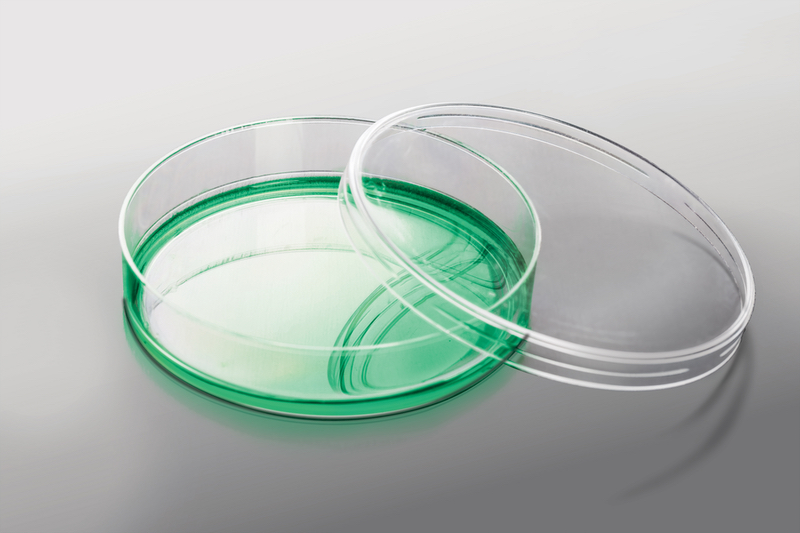
In active sampling, a defined volume of cleanroom air is continuously or intermittently drawn through a culture medium. In passive sampling, culture media are exposed to the cleanroom environment at critical points in the production process. The sedimentation rate of viable microorganisms per unit of time is then measured using culture medium plates.
The challenge of settle plates
The placement of culture medium plates required for passive viable monitoring – commonly referred to as settle plates in the pharmaceutical industry – presents several challenges. These plates should be positioned close to critical process steps, such as filling. At the same time, they must not obstruct


