Will bring scientists together to research nanotechnology applications in fuel cells and biosensors
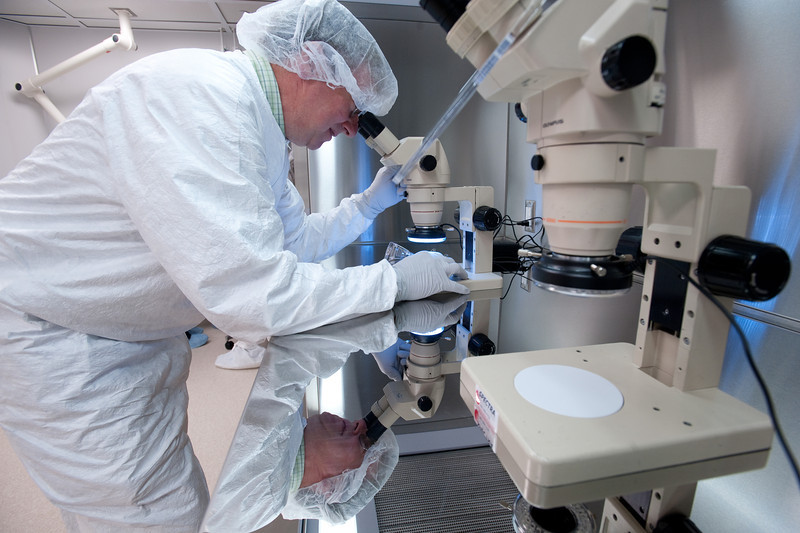
The University of Rochester in New York State, US has opened a multi-million dollar Integrated Nanosystems Centre (URnano), dedicated to r&d and making materials on a microscopic level.
The new centre will bring together scientists from a range of disciplines, including physics, optics, chemistry, biomedicine and bioengineering, to carry out research that will have possible applications in fuel cell and battery designs, biosensors and other high-tech devices.
The URnano consists of a 1,000ft2 (93m2) metrology (measurement) facility and a 2,000ft2 (186m2) cleanroom.
Congesswoman Louise Slaughter helped bring the facility to the University, securing a total of US$4.4m in federal money across three funding cycles.
Slaughter said the University had approached her in 2007 with the idea of having a cleanroom and lab that would allow it to train the next generation of scientists and engineers in nanotechnology.
“I know that this lab will create jobs, not only in the lab itself, but also in new companies catalysed by the research taking place in the lab,” she said at the opening.
University president Joel Seligman said the ‘impressive, state-of-the-art facility’ would be a source of innovation and commercialisation for the Rochester region and New York State.
“The Nanosystems Centre offers unprecedented capabilities in nanoscience research that will build on our historic strengths, encourage the development of new technologies, and facilitate collaborations with industry,” he added.
Nanotechnology is important to a range of fields, including the development of energy systems and bio-sensors. Advanced fuel cell and battery designs, which promise greater portability and less frequent recharging, can be applied to mobile communications, GPS systems, computers, and night vision devices. Biosensors with embedded nanosystem components can be used to detect biological warfare agents, such as anthrax, at very low concentrations.
URnano will complement nanotechnology research at other New York State universities, such as Albany, Cornell, and Rensselaer Polytechnic Institute.
The nanosystem programmes at the University of Rochester allow for the production of high temperature nanomaterials and incorporate the University's expertise in optics and optical device technology.
URnano is part of the Hajim School of Engineering and Applied Sciences.